Rodent structural exclusion focuses on physical home defense rather than relying on broadcast chemical baits, aligning with low-toxicity barrier protection designed around children and indoor pets. In Lubbock, seasonal…
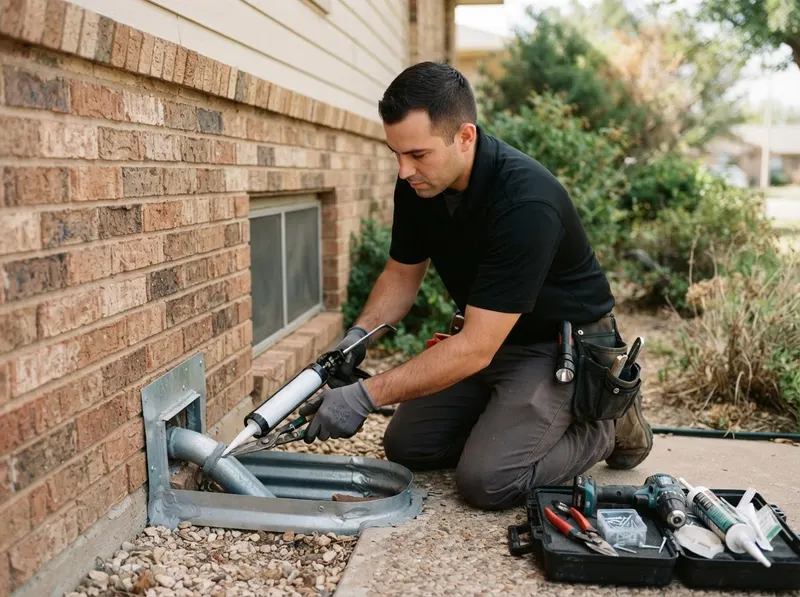
Rodent structural exclusion focuses on physical home defense rather than relying on broadcast chemical baits, aligning with low-toxicity barrier protection designed around children and indoor pets. In Lubbock, seasonal agricultural shifts and open caliche soils drive wild populations of house mice and roof rats toward residential neighborhoods when winter temperatures drop below freezing. Standard snap traps and interior baiting systems capture individual pests inside crawl spaces or attics, but they do not prevent secondary migrations through unsealed exterior wall voids. The permanent fix requires identifying structural junctions where siding meets slab foundations, air conditioning line sets enter brick facades, and roof returns meet fascia boards.
Older brick veneer residences in Tech Terrace, Rush, and Heart of Lubbock typically feature open weep holes along bottom masonry courses and weathered wooden crawlspace covers that allow immediate entry for rodents squeezing through openings as small as a dime. In contrast, newer slab constructions in Vintage Township, Shadow Hills, and Kings Park commonly experience rodent access around unsealed gas line utility penetrations, garage door bottom seals, and roof ridge vents. Sealing these vulnerabilities with 16-to-19-gauge galvanized hardware cloth, copper mesh, and metal flashing eliminates interior nesting routes without generating toxic airborne odors or leaving residual poisons inside bedroom walls.
Executing exclusion requires a systematic three-stage process: 1. A complete ground-to-roofline inspection maps every opening exceeding 6 millimeters across foundations, eaves, and plumbing chases. 2. Technicians clean openings, install galvanized hardware cloth backing, pack copper wire mesh, and seal surfaces with high-grade exterior elastomeric caulking to stop scent trails. 3. Interior crawl spaces and attic voids are monitored to ensure existing animals exit through one-way exclusion funnels rather than dying inside wall cavities. Homes in Melonie Park, Southgate, and Stubbs-Stewart with detached garages or alley-facing utility corridors especially benefit from pairing exterior door sweeps with steel threshold caps, which halts rodent travel along shared alley fences.
Every job gets a firm, written price after a free on-site visit.
Tell us about your residential rodent structural exclusion job in Lubbock and we'll send a clear, written quote, usually the same day.
 GreenShield Pest Control