Subterranean termite soil treatment in Lubbock serves as a continuous liquid defense layer applied to the perimeter earth surrounding concrete slab foundations. In Lubbock County, subterranean termites live 4 to 10…
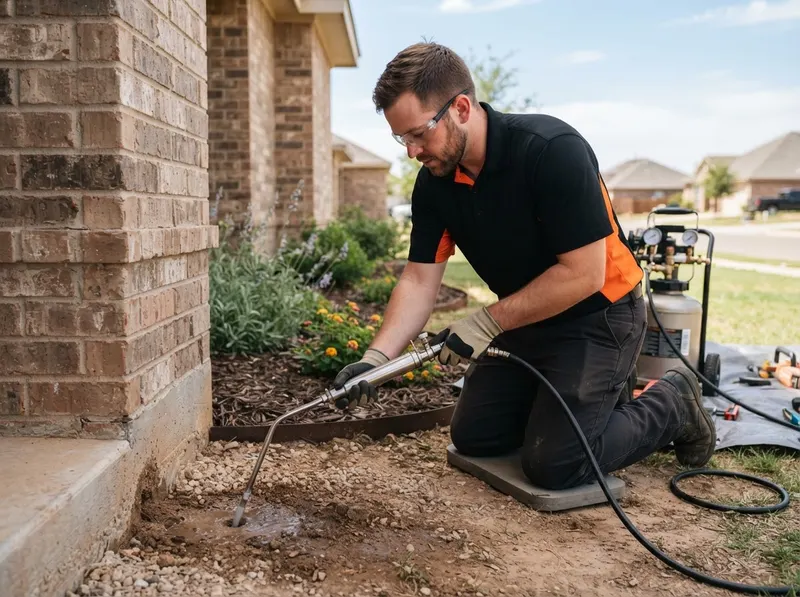
Subterranean termite soil treatment in Lubbock serves as a continuous liquid defense layer applied to the perimeter earth surrounding concrete slab foundations. In Lubbock County, subterranean termites live 4 to 10 feet below the surface to escape arid surface caliche and summer heat, surfacing through foundation expansion joints and plumbing penetrations. Traditional DIY surface sprays fail because native Reticulitermes colonies travel through covered mud tubes beneath grade. Liquid soil treatments apply non-repellent termiticides directly into perimeter trenches measuring 6 inches wide by 6 inches deep. Termites pass through this invisible zone undetected, transferring the active material back into subterranean nests through social grooming and food sharing, which collapses the reproductive colony within 60 to 90 days.
Neighborhoods with older slab builds and mature landscape irrigation systems require distinct installation approaches. Properties near Tech Terrace, Rush, Melonie Park, and Heart of Lubbock often feature expansive foundation cracks, wood-to-ground contact near decorative flowerbeds, and plumbing cutouts under slab kitchens. In contrast, newer master-planned homes in Vintage Township and Shadow Hills sit on engineered post-tension slabs where expansive clay soil creates seasonal foundation gaps. Applying a liquid soil barrier involves trenching exterior dirt perimeters and precision drilling 0.5-inch holes spaced 12 inches apart through adjoining patio slabs, driveways, and garage entries. This method creates an unbroken protective curtain along the structural perimeter, preempting the structural wood damage that often goes unnoticed behind drywall in Southgate and Kings Park homes.
Homeowners weigh liquid soil barriers against slow-acting termite bait stations. Soil treatments offer immediate, physical perimeter saturation that remains fixed in soil for 5 to 8 years, whereas bait systems require ongoing quarterly station checks and only act once worker termites locate and consume the plastic bait housing. The procedural trade-off centers on initial physical preparation: liquid treatments require temporary trenching and discreet masonry drilling through abutting concrete, whereas bait stations sit flush in turf grass but take 6 to 12 months to suppress colony pressure. When active termite swarms appear inside bedrooms or along interior baseboards in spring, liquid soil treatment halts access points directly at the concrete interface while maintaining family and indoor air safety.
Every job gets a firm, written price after a free on-site visit.
Tell us about your subterranean termite soil treatment job in Lubbock and we'll send a clear, written quote, usually the same day.
 GreenShield Pest Control